


Storm Damage Roof Repair in Texas: Fast Local Solutions
Y’all know how it goes here in Texas — one minute the sky’s blue, the next it’s black as midnight and the wind’s howlin’ like a freight train. Storms in our neck of the woods don’t mess around. Hails are the size of golf balls, straight-line winds strong enough to rattle the walls, and rains that turn streets into rivers, it all takes a toll, especially on your roof.
When the storm clouds clear, the real work begins. That’s when homeowners across San Antonio, Lytle, Leon Valley, Balcones Heights, Castle Hills, Alamo Heights, Hollywood Park, and Shavano Park start lookin’ up — literally.
And here’s the truth – your roof is your first line of defense against Texas weather. If it’s damaged and left unchecked, even a small issue can turn into a big, expensive problem. That’s why knowing who to call and what to do for Storm Damage Roof Repair Texas style is critical.
At South Texas Roofing and Exteriors, we’ve been helpin’ folks across South Texas patch, repair, and rebuild after storms for years. In this guide, we’re gonna walk you through everything you need to know about storm damage repair, from spotting the signs to finding the right pros for the job.
So grab a sweet tea, settle in, and let’s talk roofs.
Why Storms Hit Texas Roofs So Hard
Living in Texas, we’re no strangers to wild weather. Our roofs take a beating year-round, but especially during storm season. Here’s what makes it rough:
- Hailstorms: Even hail the size of a quarter can crack shingles, dent metal, and bust up flashing. Larger hail? It can punch straight through a roof.
- High Winds: We’re talkin’ winds that rip shingles clean off or lift entire sections of roofing.
- Heavy Rain: Once a roof’s compromised, water sneaks in. And in Texas, when it rains, it pours.
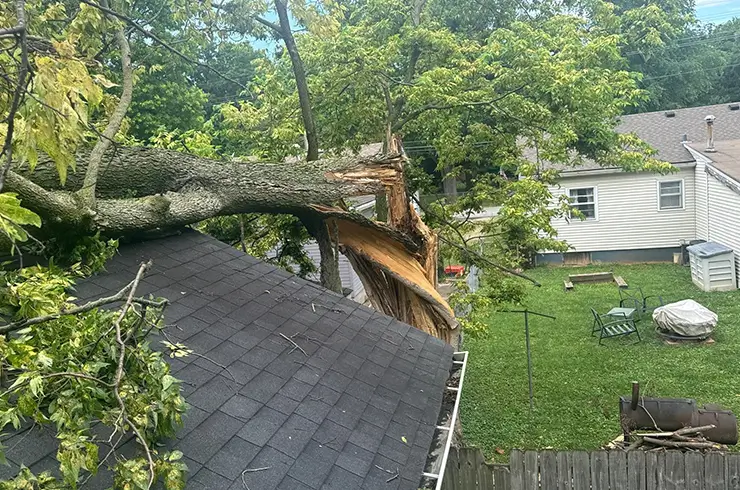
- Falling Debris: Tree limbs and flying objects can leave gaping holes.
When Mother Nature shows her temper, your roof is the one takin’ the punches.
Signs Your Roof Took a Beating
After a storm, you might be tempted to shrug it off if you don’t see anything obvious. But storm damage isn’t always easy to spot from the ground. Here’s what to look for:
- Missing shingles scattered in the yard or driveway.
- Dark spots or bruises on shingles where hail hit.
- Dents in gutters, downspouts, or vents (a sure sign hail made contact).
- Leaks in the attic or ceiling stains inside the house.
- Granules from shingles clogging your gutters.
- Loose flashing around chimneys or skylights.
If you see one or more of these, chances are your roof needs professional attention.
Why Quick Storm Damage Roof Repair Is Critical
Here’s the deal: waiting is the worst thing you can do.
- Water damage spreads. Once rain seeps in, it can rot wood, ruin insulation, and lead to mold.
- Insurance deadlines matter. Most policies require prompt reporting of storm damage.
- Future storms will make it worse. A weak roof can’t handle another round.
When the storm hits, you need fast local solutions. That’s why callin’ experienced Roofing Contractors Texas homeowners trust makes all the difference.
Three Essential Steps Every Texas Homeowner Should Follow After Storm Damage
Step 1: Safety First
Before you climb a ladder or start pokin’ around, remember this: storm-damaged roofs can be dangerous. Shingles might be loose, the structure weakened, and surfaces slick.
Instead of riskin’ it, keep your boots on the ground and call a pro. Roofing companies like ours have the gear and the know-how to inspect safely.
Step 2: Call Your Insurance Company
Most Texas homeowners’ insurance covers storm damage. But here’s the catch — you’ve gotta document everything.
Tips:
- Snap photos of visible damage (from the ground if possible).
- Note the date and time of the storm.
- Keep receipts if you do any temporary fixes (like tarping).
Insurance companies deal with storms every day, but having good documentation speeds things up.
Step 3: Choose the Right Roofing Contractors Texas Style
Not all roofing contractors are created equal. After a storm, you’ll see out-of-town “storm chasers” roll in, knockin’ on doors and makin’ big promises.
Don’t get caught up in the hustle. Here’s how to choose right:
- Go local. Contractors from San Antonio or nearby towns know the weather, building codes, and community.
- Check reviews and references. See what your neighbors are saying.
- Ask about insurance and licensing. Don’t settle for less.
- Look for experience. A roofer who’s been around for decades knows the ins and outs of storm repair.
At South Texas Roofing and Exteriors, we’ve been servin’ families here for years. We’re local, we’re reliable, and we know what Texas storms can do.
Temporary Fixes Until the Pros Arrive
Sometimes, you can’t get repairs done the same day. If that’s the case, temporary fixes can help minimize damage:
- Tarp the roof. Secure a heavy-duty tarp over the damaged area to keep water out.
- Bucket leaks inside. Catch drips to protect flooring and furniture.
- Clear debris safely. Remove small branches or objects if you can do it without risk.
These are stopgaps, not solutions — but they buy time until the pros arrive.
The Storm Damage Roof Repair Process in Texas
So what happens when you hire roofing contractors for storm repair? Here’s the typical process:
- Inspection: A thorough look at shingles, flashing, gutters, attic, and structure.
- Documentation: Photos and reports for insurance claims.
- Estimate: A clear list of what needs to be fixed and how much it will cost.
- Repairs or Replacement: Depending on how bad the damage is, you may need to fix a part of the roof or replace the whole thing.
- Cleanup: Cleaning up means getting rid of trash, nails, and other things.
Done right, the process is smooth and stress-free.
Different Types of Roof Storm Damage Repairs
Every storm’s different, and so is every repair. Here are common ones we handle across Texas:
- Shingle replacement for wind or hail damage.
- Flashing repair to stop leaks around chimneys and skylights.
- Decking repair if water’s gotten into the wood below shingles.
- Gutter replacement if hail dented or crushed your drainage.
- Full roof replacement when damage is too severe to patch.
We work with all roofing materials — asphalt shingles, metal, tile, you name it.
Preventing Future Storm Damage
You can’t stop Texas weather, but you can prepare:
- Trim trees near your roof.
- Clean gutters before storm season.
- Schedule annual inspections with trusted roofing contractors.
- Upgrade materials (impact-resistant shingles hold up better against hail).
Think of it as giving your roof a fighting chance.
Local Solutions for Local Folks
Here’s the thing: storm damage in Texas isn’t just about fixing shingles. It’s about helping families feel safe again in their homes. That’s why we take pride in serving San Antonio, Lytle, Leon Valley, Balcones Heights, Castle Hills, Alamo Heights, Hollywood Park, and Shavano Park.
We live here. We work here. And when storms hit, we’re right here with you — not miles away.
Why Choose South Texas Roofing and Exteriors?
When you’re searchin’ for Roofing Contractors Texas, here’s why folks keep callin’ us:
- Local expertise: We know Texas storms and how to fix their damage.
- Fast response: We don’t leave you waitin’ while water pours in.
- Quality work: Our repairs stand up to the next storm.
- Trusted service: Our reputation’s built on honesty and reliability.
We don’t just patch roofs. We protect homes, families, and peace of mind.
Final Thoughts: Don’t Wait, Repair Today
Texas storms don’t wait, and neither should you. If your roof took a hit, even if it looks minor, don’t gamble with your home’s safety. With Storm Damage Roof Repair Texas services from trusted local pros, you can rest easy knowin’ your roof’s ready for whatever comes next.
Call South Texas Roofing and Exteriors Today
Need fast, reliable storm repair? Call the experts your neighbors already trust.
At South Texas Roofing and Exteriors, we’re here for you — rain or shine. From storm inspections to full roof replacements, we’ve got the tools, the team, and the Texas grit to get the job done right.
Contact us today, for your free quote and inspection. Let’s make your Texas roof strong again.